Polk County Authorizes Sunday Liquor Package Sales
Polk County is one of the fastest-growing counties in Florida, something that has added many newly-created liquor licenses under state law. In an apparent response to thechanging times and conditions, the County Commission recently approved a number of changes to its ordinances on alcohol sales.
The highlight of these changes for consumers is the repeal of the long-time prohibition of Sunday liquor package sales. Customers can now purchase a bottle of whiskey to bring to their afternoon football watching party in Polk County. Future operators and their investors will appreciate the reduction in separation distance requirements, which will make it easier to find a site to operate several common types of alcoholic beverage licenses (1COP, 2COP, 4COP, and 3PS).
The remaining text has been excerpted from the commission’s staff report:
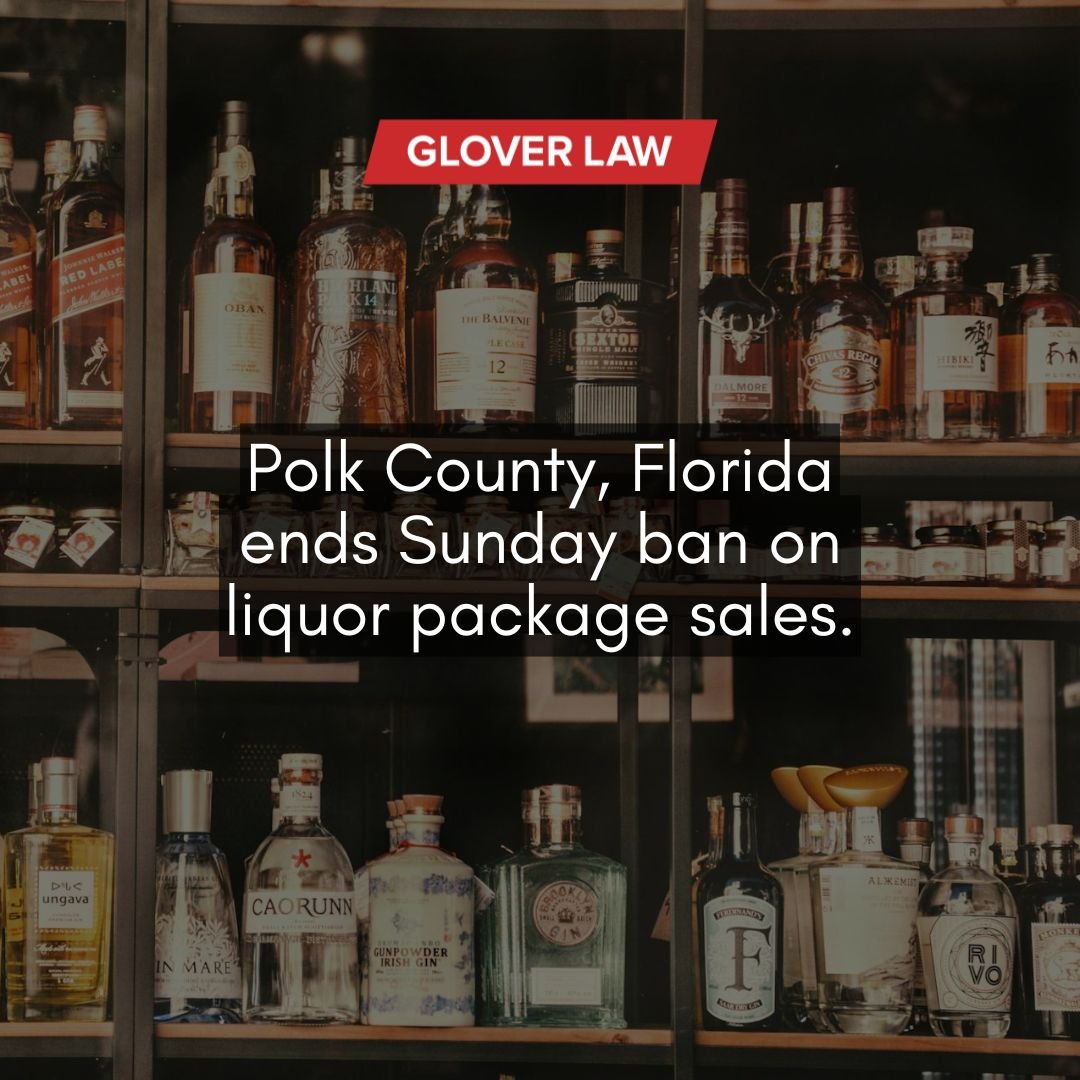
The objective of Section 224 of the LDC is to prevent potentially conflicting uses from co-locating in close proximity to one another. From a land use and planning standpoint, it is important to maintain a separation in alcohol businesses to religious institutions or schools. Distance and hour regulations have been part of the County regulations since the 1970s. Over the past thirteen years, Staff has found all variance data to reduce these separation distances have been approved. In many instances these distance reductions have become customary, which ultimately defeats the purpose of separation in the first place. This data precipitated further investigation into Section 224 of the Land Development Code (LDC). Based on additional analysis, Staff found inequities in how these regulations have been applied, including operation hours for incorporated and unincorporated portions of the County, and measurement methods, which can cause nuances and a loss in effective implementation. Based on these findings, Staff has recommended the following amendments in Section 224:
Distance
Beer & wine consumption on premises (1&2COP) – reduce distance separation from 1,000 feet to 500’ feet.
Beer, wine, liquor consumption on premises (4COP) – reduce distance separation from 2,500 feet to 1,000 feet.
Liquor package sales (3PS)– reduce distance separation from 2,500 feet to 750 feet.
Hours
3PS license – permit Sunday sales from 12:00 P.M. to 12:00 A.M. Monday next.
1,2,4COP license – extend time of Sunday sales earlier by one hour to 11:00 A.M. to 12:00 A.M. Monday next.
Measurement
Change distance measurement from property line to property line to legal route of pedestrian travel.
Polk is large and 83.6%, of the County is unincorporated. Polk County has seen record economic growth since 2013. Generally speaking, businesses conducting package sales on site are typical big box stores with separate liquor store entrances. There are few nuances and inconsistencies to current regulations. Religious and educational facilities within a Commercial Future Land Use Map District and sit-down restaurants are already excluded from distance separation requirements. Public perception changes over time, and many times these uses can co-exist in close proximity without any extra burden on one another. Per LDC Section 121.C.3, if a school or religious institution arrives after a business serving alcohol has been established, the discontinuance of alcohol sales is not necessary, and no extra burden of approval would be placed on either entity.
Staff finds these amendments can help continue to draw economic development for potential tax revenue. It will also provide consistency with other jurisdictions to attract businesses that would otherwise locate elsewhere. Besides these benefits across the board, the intent would also help reduce Staff burden on variances that regularly receive approval and to ensure variances are last resort.